
Trade unions for palm oil workers unite for fair palm oil
Palm oil is used in many foods and cleaning products. As well as being harmful to nature, however, the palm oil industry is often also dangerous for workers on the plantations. Mondiaal FNV is committed to supporting independent trade unions for workers in Indonesia and Colombia, and, together with them, we have formed the ‘International Palm Oil Workers United’ trade union network.
Part of the palm oil chain
The fact that we are all part of a global chain means that we should also work together to improve conditions along the chain as a whole. This is necessary because a number of large companies are the decision makers with regard to relations within the chain, and therefore also regarding working conditions on the plantations. Major players are oil-processing refineries, which are usually very large multinationals with branches in the Netherlands, as well as supermarkets and large food and shampoo brands.
International trade union network
Therefore, in 2022, we started building an international trade union network – ‘International Palm Oil Workers United’ – with unions from Colombia, Indonesia, and the Dutch FNV itself. Several African unions are likely to join us in the near future.
Palm oil companies: Take responsibility!
The network has drawn up a joint strategy to achieve better work conditions on palm oil plantations and in mills. We are holding major companies accountable throughout the chain, based on the OECD Guidelines for Multinationals [link naar achtergrond OESO] and imminent legislation governing Due Diligence relating to human rights and trade and industry [linkje naar achtergrond], which will oblige companies to identify and reduce the risk of human rights violations within their supply chain. Part of the strategy is a meaningful dialogue with stakeholders in all phases of the process. Trade unions in production countries should therefore be included in the dialogue with these companies.
We will start with companies that have links with plantations where we have partner unions, and where the FNV is also organised and involved. Although the situation in the Netherlands is generally far better than in countries that produce palm oil, strong international cooperation is also essential to strengthen the FNV’s position within these companies. Together we stand strong.
Research on Agrochemical Exposure
The International Palm Oil Workers United (IPOWU), with support from Profundo and funding from Mondiaal FNV, conducted a survey among 1,436 workers in Colombia, Ghana, and Indonesia. This research revealed significant risks of exposure to agrochemicals, such as direct contact during the application of pesticides or indirect contact during harvesting and maintenance tasks. Despite occupational safety laws, compliance remains weak due to inadequate oversight. Read more about the research and the findings here.
The purpose of the network
- To exchange information about experiences in the industry and to learn from each other;
- To show solidarity for each other when trade unions are campaigning or engaged in a conflict with a company;
- To stand strong together in order to negotiate with major players within the chain, the goal being that these companies will assume responsibility for improving conditions on the plantations and in the mills.
Our goals
Safe and permanent jobs for palm oil workers, with a special focus on:
- Wages
- Job security
- Health and safety
- Trade union rights
Portraits from Colombia and Indonesia
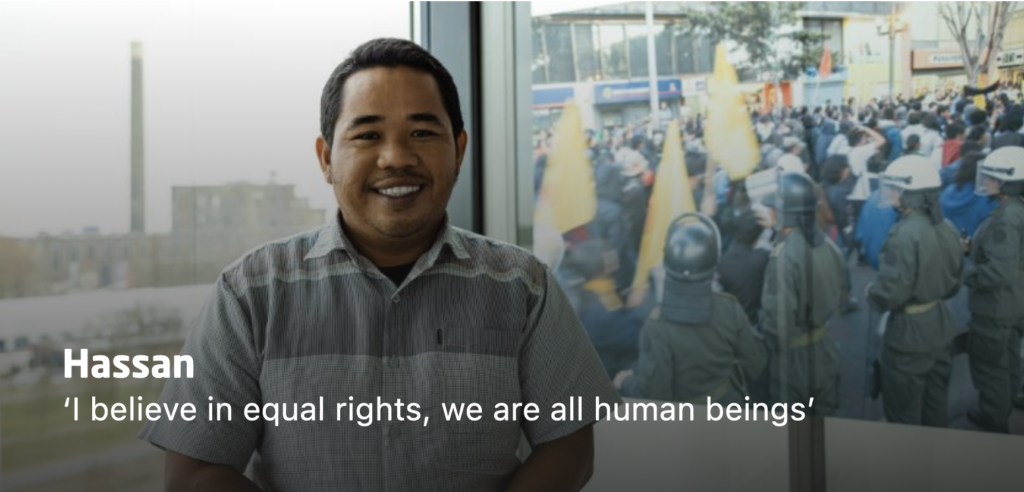
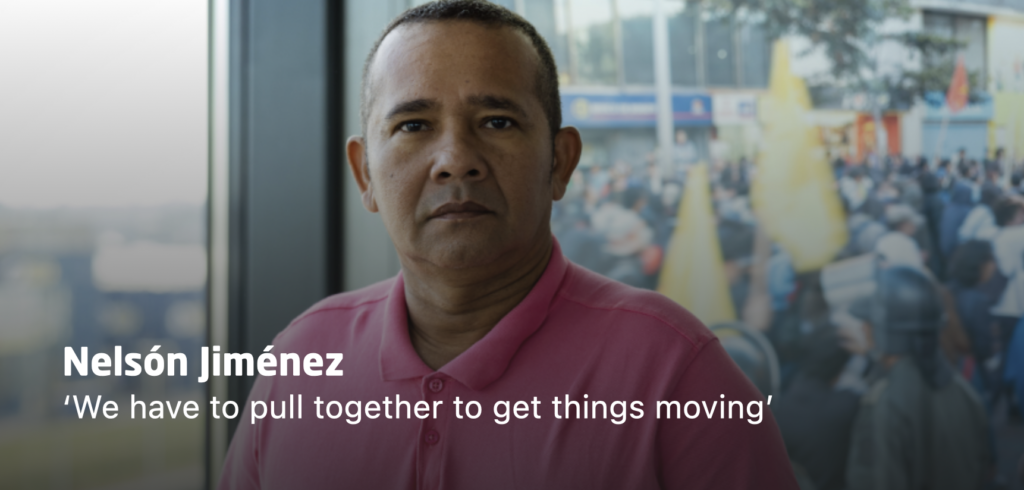
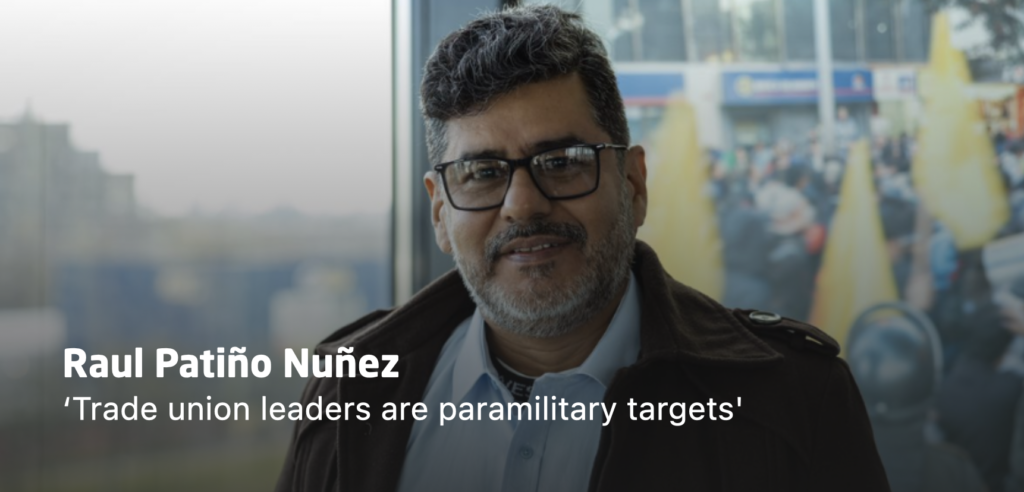
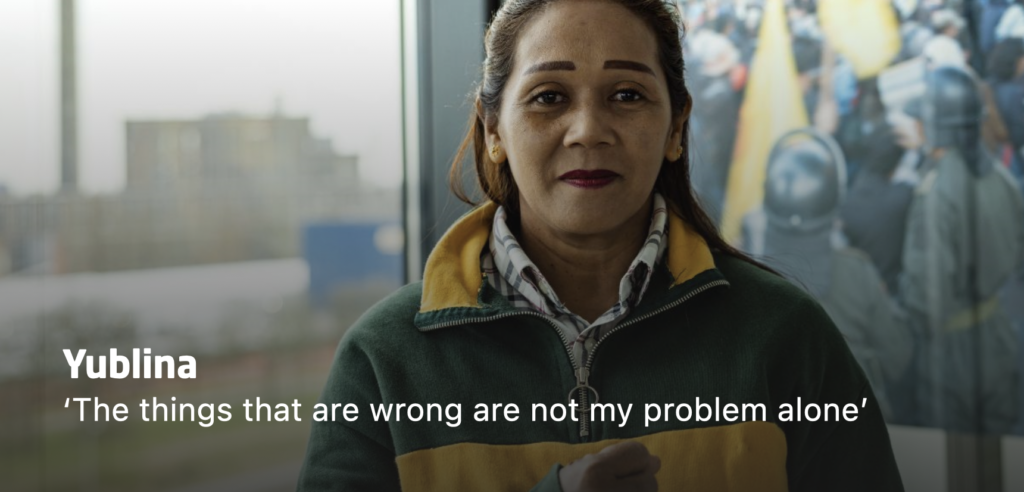
Video interviews with the partners
Video interview Yublina Lina
Yublina Lina works at a palm oil plantation in West Kalimantan and is the general secretary of the federation in the region. She explains why the union is important. That something needs to improve in the working conditions because they are very unsafe now. “Cooperation helps me to fight for the rights of the workers, both women and men.
Video interview Ndaizivai Kamoto
Ndaizivai Kamoto is the coordinator of the palm oil program at the IUF in Africa. In this interview, she discusses the working conditions on African plantations. She talks about the position of women during work, including: the lack of sanitary facilities, the absence of permanent contracts, and a high risk of sexual harassment. In this video, she explains how she believes collaboration can improve the conditions.


Video interview Raul Patiño Nuñez
Raul Patiño Nuñez, union leader of Sintraproaceites in Colombia. In this video interview, he talks about what needs to be improved for palm oil workers in Colombia, including higher wages and more stability. He also explains why international collaboration is important to him.
Consumers are large-scale users of palm oil
Palm oil is an important ingredient in many food and cosmetic products, and it is also used for frying and as biofuel. Without realising it, we, as consumers, are large-scale users. The world cannot do without this product because other oil sources often require even more land and yield less per hectare. The demand for palm oil has risen significantly, resulting in more plantations being created and, particularly in Asia, in considerable deforestation as well as the loss of rainforests and biodiversity.
Palm oil is a profitable product for many companies
This also means that increasingly more people are employed in the palm oil industry, with an estimated 16 million in Indonesia alone. This number includes many small farmers, with a large proportion of them working on plantations, often those belonging to large companies. The first extraction of oil from the picked fruit needs to be done within 24 hours, and this takes place on location in mills. The further processing and refining usually takes place at other places all over the world, including the Netherlands, which is a major importer as well as an exporter of palm oil and related products. For many companies, palm oil is a highly profitable product.
Challenges for workers
The situation for workers differs from one region or country to another, but there are also many similarities. Harvesting the fruit of oil palm trees is very hard work, and is carried out under unhealthy working conditions almost everywhere. Furthermore, pesticides are heavily used, often without workers having adequate protection. Large numbers of women also work on the plantations, usually spraying crops and picking up loose fruit that has fallen to the ground. Very few people have a permanent contract with social security and other provisions, women even less often than men. The wages are usually low, sometimes even below the statutory minimum. Organising people is a major challenge due to the opposition to trade unions, the large number of casual workers, and the often very remote plantations. Trade union work is also often dangerous, especially in Colombia, with trade union leaders sometimes even being murdered.
How Mondiaal FNV contributes to improving labour conditions
For several years, Mondiaal FNV has supported trade unions that organise workers on oil palm plantations and in mills in Colombia and Indonesia, monitor working conditions, and negotiate with employers, and, since 2020, also trade unions in Africa (Ghana, Cameroon, Nigeria, and Uganda).
Mondiaal supports the trade unions in building capacity: for example, to negotiate effectively, to organise more workers, to train women with regard to themes like harassment in the workplace, to provide health and safety training, and so on. We also support campaigns and studies conducted by our partners. Coordination networks have been established in Colombia and Indonesia. Priorities are determined by the unions in different parts of the world.